
Mulching, lot clearing, and pad prep across Surprise and the Northwest Valley — free parcel walk, itemized written numbers.
Beardsley Land Clearing connects owners in Surprise and the Northwest Valley with a local land clearing contractor working velvet mesquite, blue palo verde, creosote flats, and the invasive winter grasses that now fill the ground between them. Every scope is built around what the parcel actually presents — caliche depth, wash alignment, machine access, protected native plants that stay flagged and standing, county dust obligations, and the finish the next use requires.
Saguaro is highly safeguarded and stays standing. Ironwood, mesquite, and palo verde sit in salvage categories, so the state hears about a removal before a machine does.
Arizona protected native plant rulesDisturb a tenth of an acre and the county wants a permit, a trained supervisor, water on the surface, and no bare dirt left loose into an August evening.
Maricopa County air quality rulesThe sand ribbon that looks like nothing in April moves real water in twenty minutes in August. Clearing keeps the alignment, the width, and the bank vegetation that holds it.
Flood Control District mapping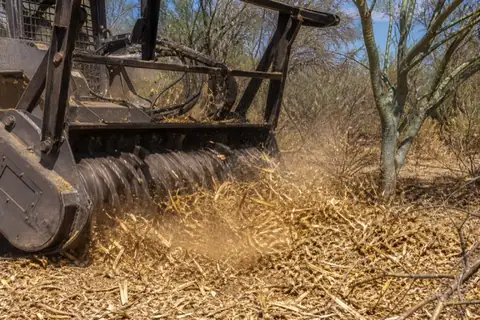
A drum mulcher takes mesquite thickets and creosote down to a chip layer in place, so nothing gets piled, burned, or trucked off the parcel.
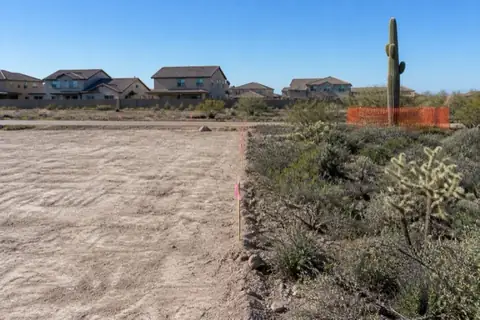
Taking a raw or neglected parcel to a clean, staked, buildable surface — vegetation off, roots out of the footprint, drainage still pointed where it belongs.
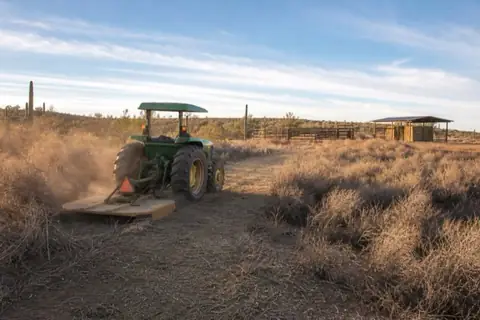
Bringing neglected ranchette and former farm ground back into use — mesquite thickets thinned, old ditch berms addressed, turnout and paddock ground reopened.
| Mesquite and juniper ground, per acre | $1,500–$3,500 |
| Light brush, per acre | $1,200–$2,500 |
| Heavy timber, per acre | $3,500–$6,000+ |
| Skid steer with mulcher, hourly | $175–$300 |
| Machine and operator, day rate | $2,500–$4,500 |
| Stump grinding, each | $150–$500 |
Caliche depth, wash density, and how far a machine has to travel move a Northwest Valley parcel around inside those bands. The free walk replaces the range with a number.
Price My ParcelCorners, entry point, wash alignments, caliche probe holes, and an honest look at what is staying versus what is going.
Saguaro and keeper trees get paint and pin flags, protected species get filed with the state, and utility locates go in before any tooth.
The mulcher takes the growth down where it stands and leaves chip on the ground instead of a pile waiting on a burn window.
Where a build follows, roots come out of the footprint, fill goes in lifts with water and a compactor, and drainage leaves the way it arrived.
Tell the provider what is standing, where a machine can get in, and what the ground has to become. Those three answers are most of a quote; the parcel walk supplies the rest.
Describe the parcel and the next use. A local provider follows up to arrange the walk.
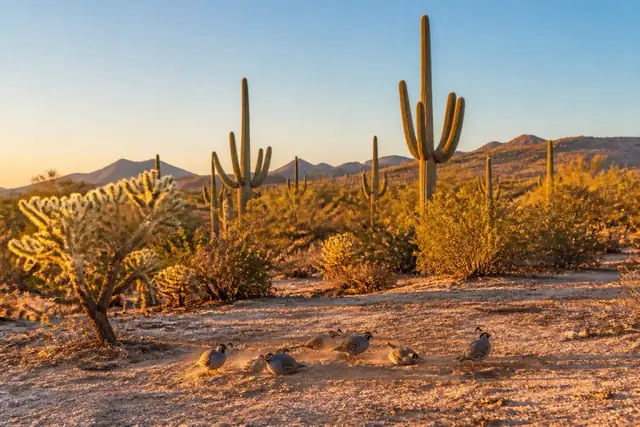
Northwest Valley, drawn not to scale
Arid-Southwest ground is cheaper per acre than timbered country because there is simply less standing on it. Published 2026 guides put mesquite and juniper clearing in the region of $1,500 to $3,500 per acre, with a mulcher and operator running roughly $175 to $300 an hour. Where a Northwest Valley parcel lands inside that band depends on mesquite density along the washes, how far the machine has to travel, and whether roots have to come out. Every request through this site comes back as a free written figure for the actual parcel.
Because Arizona protects its native plants by category, and undisturbed desert is full of them. Saguaro sits in the highly safeguarded tier and is designed around rather than removed. Ironwood, mesquite, and palo verde sit in salvage categories, which means the state expects advance notice before they are destroyed so they can be inspected or salvaged. Filing that early is what keeps a start date from slipping.
Often yes, and it comes from two directions. Maricopa County requires a dust control permit once a project disturbs a tenth of an acre or more, and expects trained supervision on site. Separately, grading and drainage inside the Surprise city limits go through city review, while parcels outside the limits answer to the county. Once a site passes an acre of disturbance, state-administered storm water requirements attach as well.
Mulching grinds vegetation at the surface and leaves the root system in the ground — the right answer for fire clearance, fence access, view lanes, and general acreage maintenance. Grubbing pulls roots and organic material out, which is what a slab, a footing, or an engineered pad requires. Most parcels out here use both: mulch the wider acreage, grub only the footprint that will carry weight.
Most of it stays. A chip layer left on the ground holds a disturbed surface against monsoon outflow wind, suppresses the next winter's annual growth, and satisfies the stabilization the county expects on any disturbance. Mesquite worth splitting gets set aside. Only genuinely mixed debris — old fencing, construction material, buried farm junk — has a real reason to be trucked away.
Beardsley Land Clearing is an independent local marketing site. A call or form goes to a local land clearing contractor who can walk the parcel, look at access and caliche and what is standing, and put a written number together. The estimate, the schedule, and any agreement are handled directly between you and that provider, and asking costs nothing.